
How does the Energy Industry Sector CEO Analysis compare to the 250 Top Performing Companies in 2026?
Zayla, a Gallagher Company examined executive compensation practices across 250 of the highest-performing U.S. companies to uncover how CEO pay and incentive design are evolving.
This analysis takes a closer look at CEOs within the Top Performing 250 list, comparing their compensation levels with those observed specifically across the Energy sector.
The findings draw on disclosures from fiscal year 2024 and 2025 SEC filings. For the Energy sector analysis, we selected the top 10 most improved companies based on 1-, 3-, and 5-year TSR performance. Median values from this group are used for comparison with the Top 250 list.
Energy Sector CEO Compensation Changes
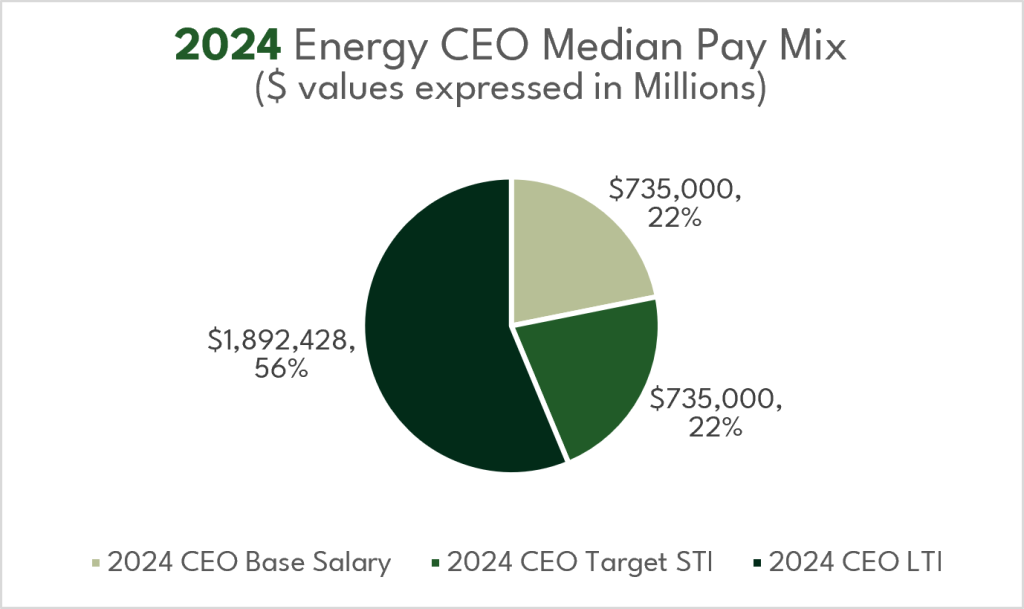
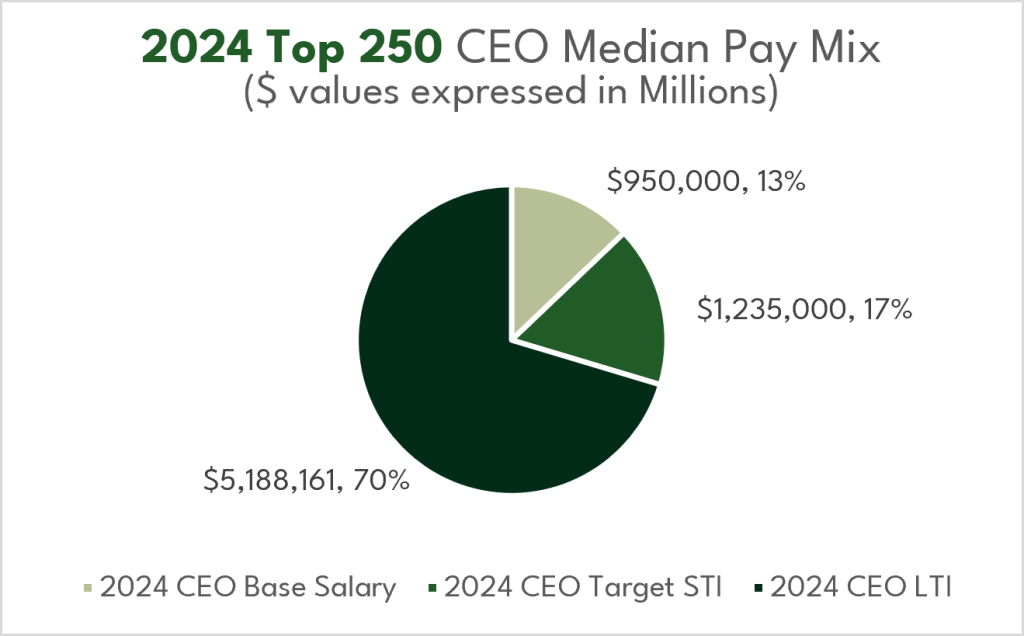
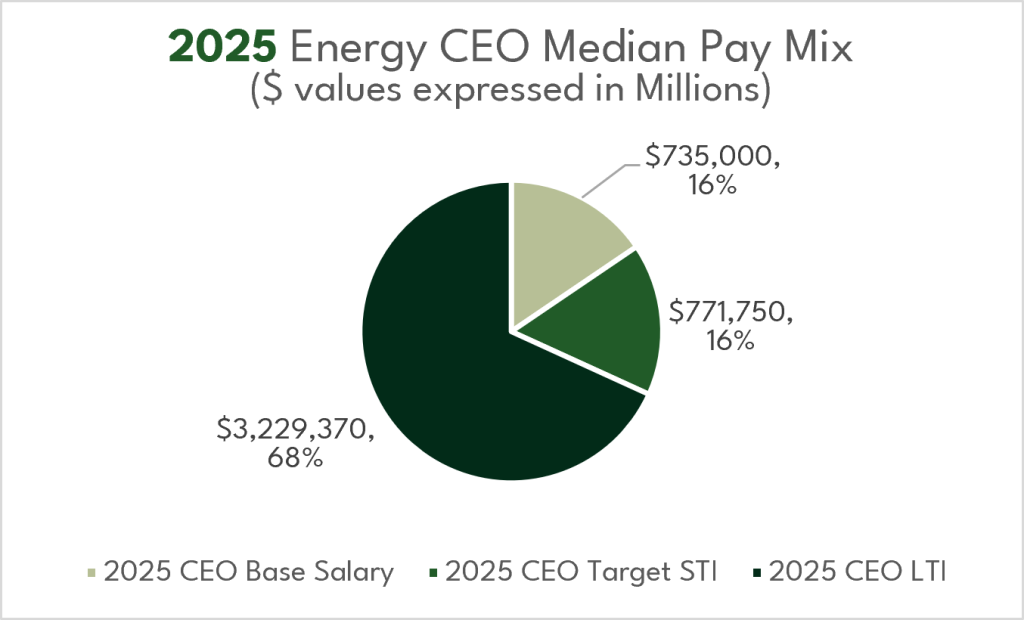
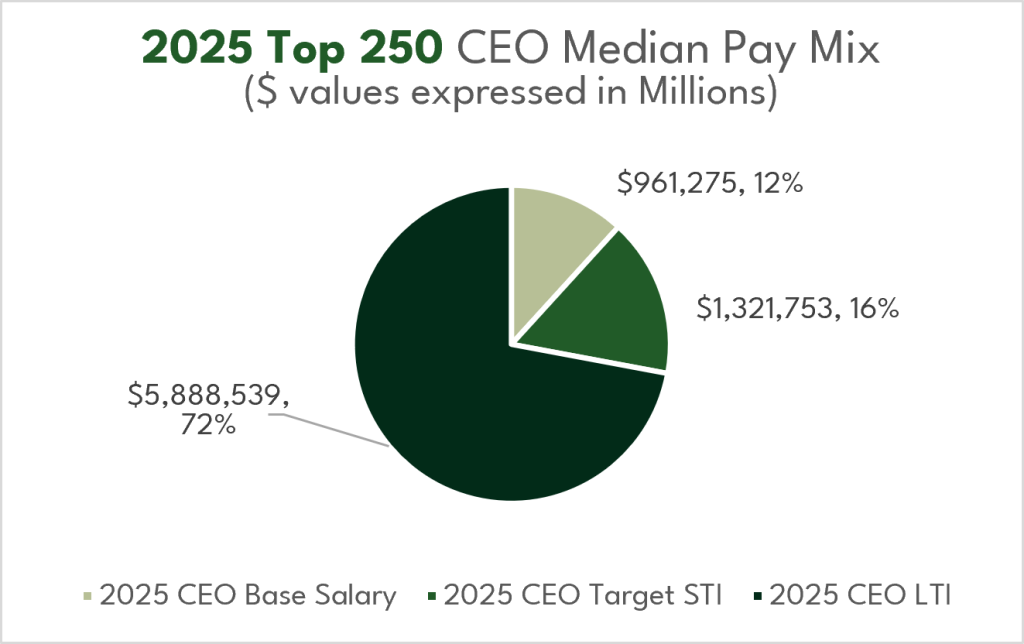
Across both the overall Top 250 and the Energy sector, CEO compensation continued to place greater emphasis on long-term incentives (LTI). The gap in CEO LTI allocation between the Energy sector and the overall Top 250 narrowed from 14 percentage points in 2024 to 4 percentage points in 2025.
Observed across the overall Top 250:
- Base salary increased 1.2%
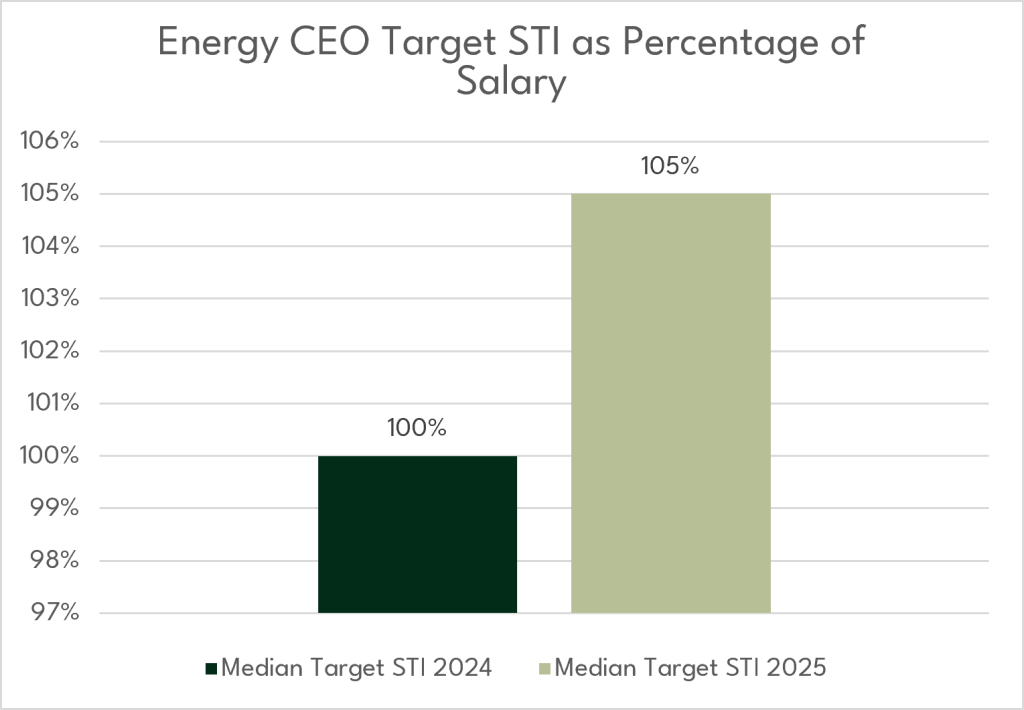
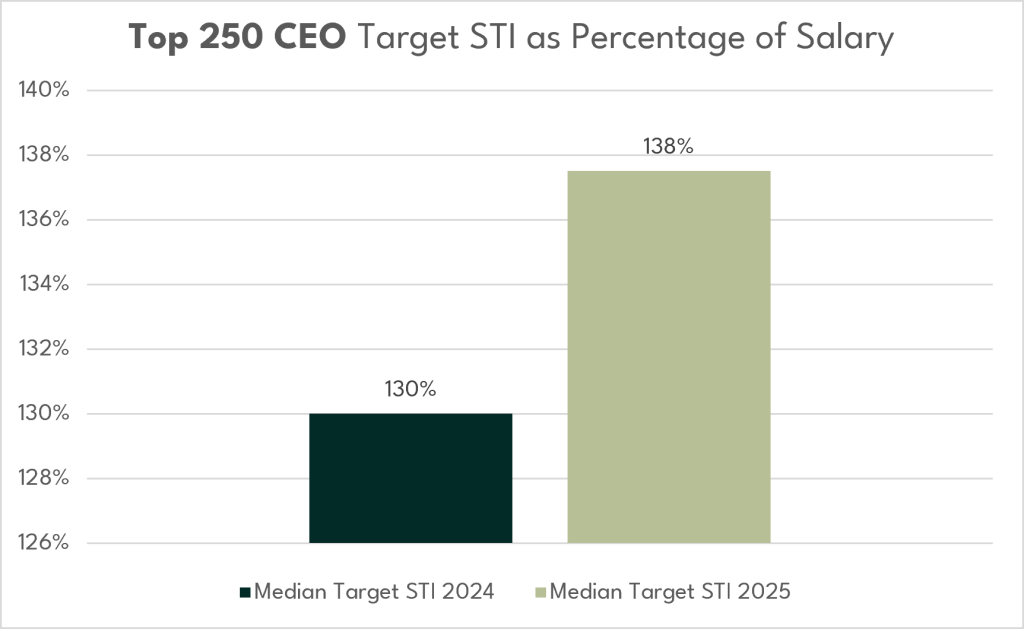
- Target STI opportunity increased 7%
- Actual LTI values increased 13.5%
Within the Energy sector:
- Base salary remained roughly the same
- Target STI opportunity increased 5%
- Actual LTI values increased 70.6%
For the Energy sector, select LTI values were annualized where disclosures reflected non-recurring compensation arrangements. Compensation associated with newly appointed Co-CEO roles was excluded where necessary to improve year-over-year comparability.
Although LTI pay mix levels converged in 2025, the substantially greater growth in LTI award values among Energy companies points to a stronger shift toward equity-based compensation than was observed across the broader Top 250.
This trend may signal the Energy sector’s growing use of long-term incentives to align executive pay with long-term performance and support retention through cyclical market conditions. Dollar values below are expressed in millions and rounded to the nearest hundredth.
Energy Industry CEO LTI Mix Changes
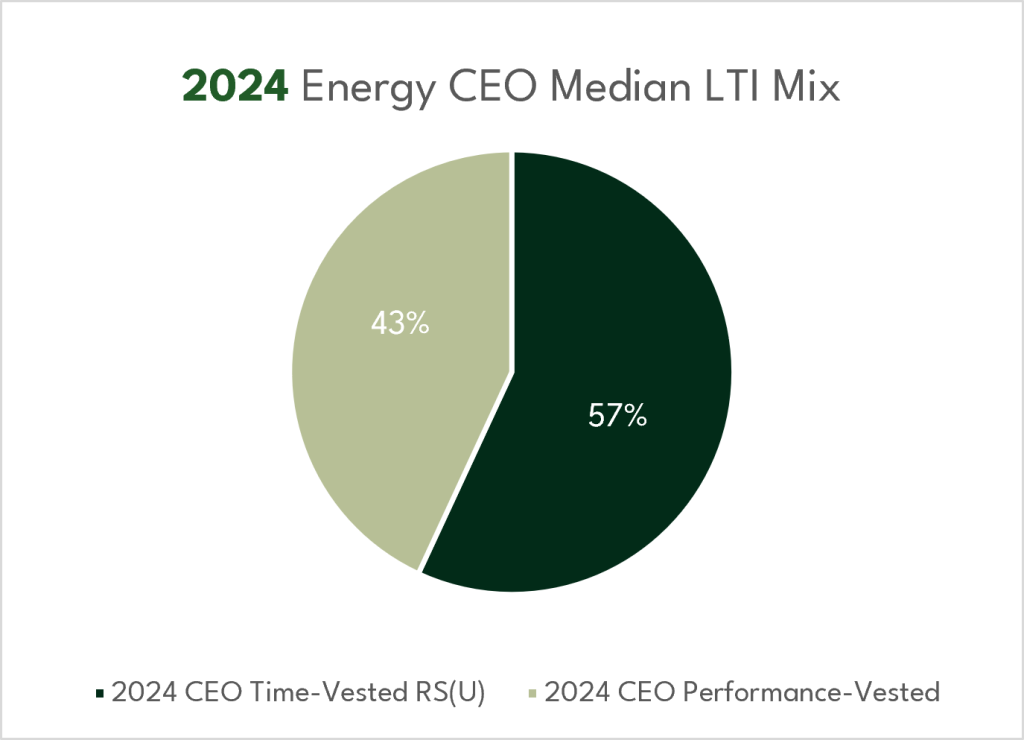
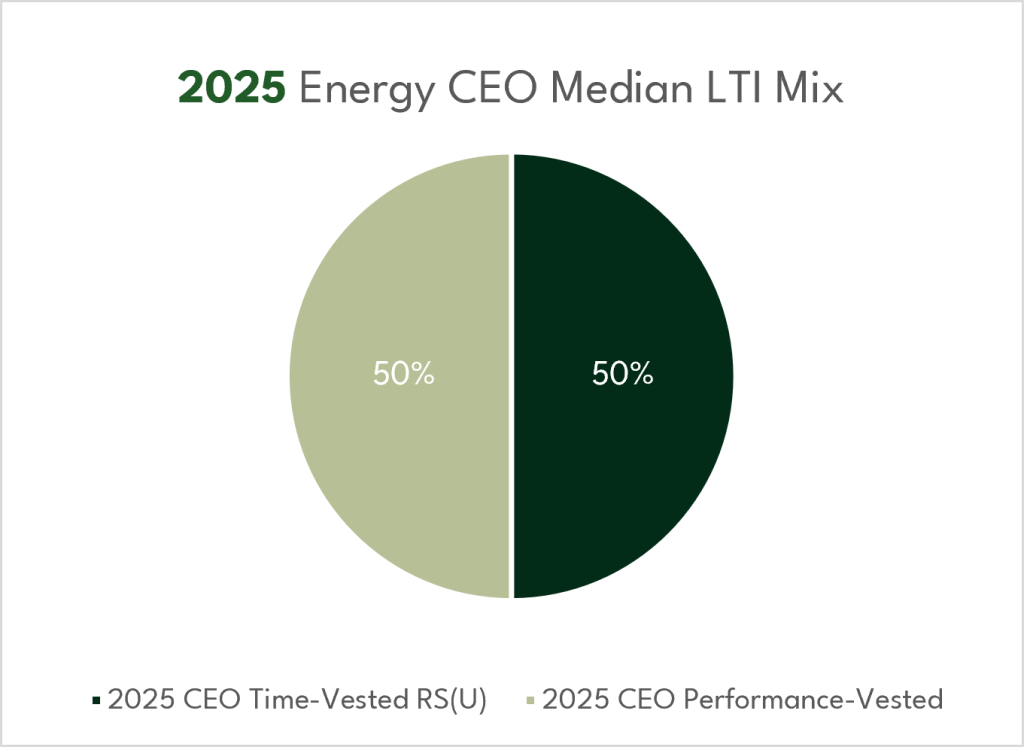
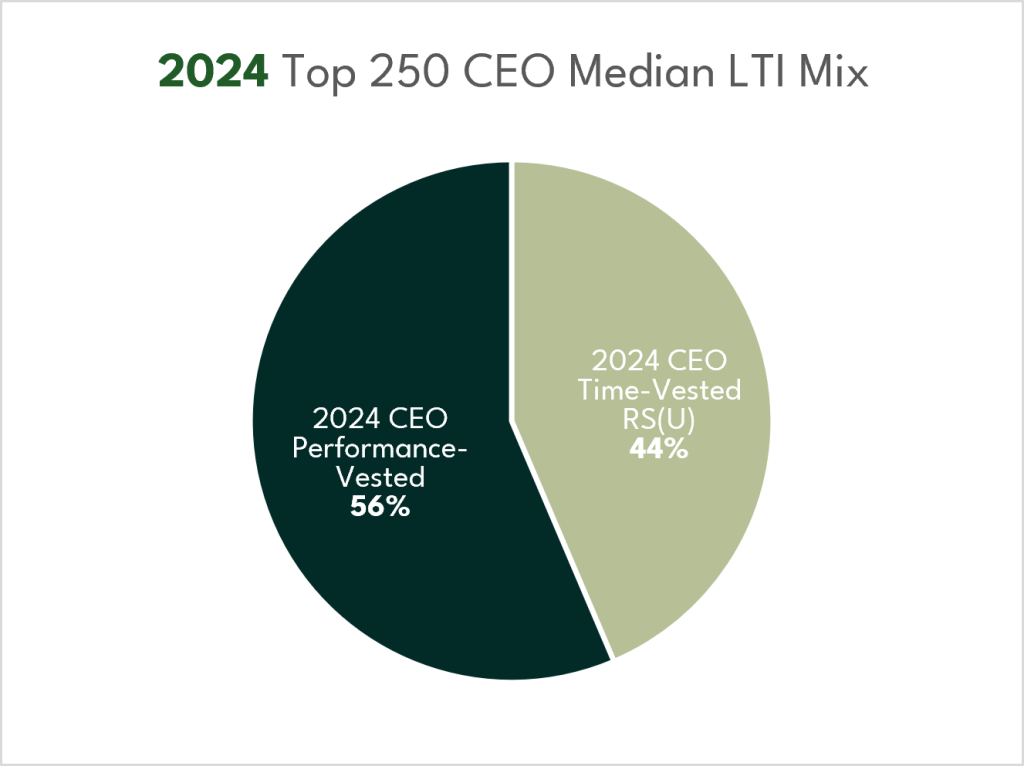
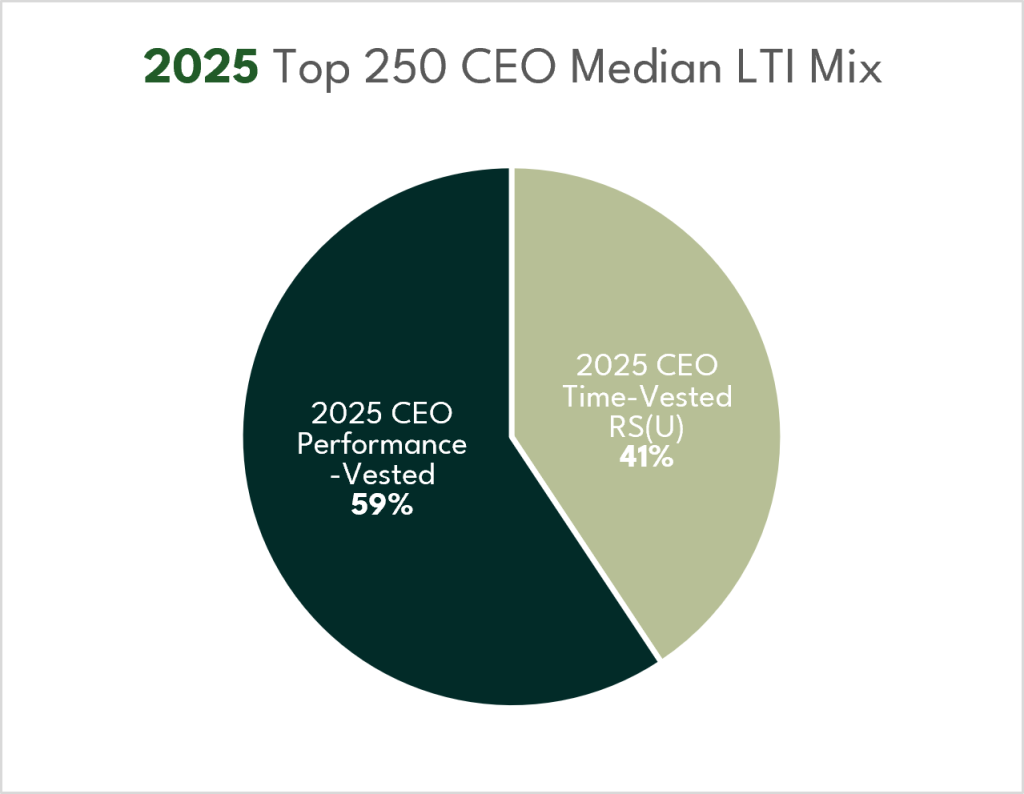
The 2024-to-2025 analysis of CEO long-term incentive (LTI) vehicle mix points to a continued shift toward performance-vested equity across both the overall Top 250 and the Energy sector. The weighting of performance-vested awards increased 7% within the Energy sector, compared with a 3% increase in the overall Top 250. Performance-vested equity continues to gain prominence as a core component of CEO compensation, reflecting a broader shift away from time-based awards toward performance-based vehicles that strengthen pay-for-performance alignment. This shift was particularly pronounced in the Energy sector.
From an allocation perspective, Energy companies reduced the weighting of RSUs by 8.1%, with a prevalence rate of 97% across 2024 and 2025. By comparison, the allocation of performance-vested awards increased 21.4%, with a prevalence rate of 79% across 2024 and 2025, underscoring broader adoption of performance-based vehicles.
Within the overall Top 250, the weighting of performance-vested awards increased notably by 12.7%, with a prevalence rate of 81% between 2024 and 2025. Taken together, companies are directing a greater share of CEO compensation to performance-vested awards while also expanding their use within compensation programs. The trend is especially evident in the Energy sector, where the slight shift from time-vested equity has been accompanied by stronger growth in the use of performance-based vehicles, creating a more balanced mix.
Energy CEO Target STI Changes
From a short-term incentive (STI) perspective, target STI opportunities increased across both the overall Top 250 and the Energy sector. However, growth in target STI pay was more modest within the Energy sector, increasing 5% from 2024 to 2025, broadly in line with the 5.8% increase in the overall Top 250. Considered alongside the sector’s stronger growth in long-term incentive awards, the findings suggest that Energy companies continue to prioritize long-term, performance-oriented compensation over short-term pay opportunities. Long-term incentives may also support executive retention by linking a larger portion of compensation to future service and performance.
Key Takeaways
- Energy companies placed greater emphasis on long-term incentive compensation growth in 2025 than the broader Top 250 sample, driven primarily by an increased allocation to performance-based PSUs.
- Changes in target short-term incentive opportunities, by comparison, were relatively modest. The trend reinforces the sector’s continued focus on pay-for-performance and the expanding role of long-term incentives within CEO compensation programs.
- Given the Energy sector’s exposure to market fluctuations and cyclical business conditions, performance-based long-term incentives may offer an effective way to encourage sustained performance and long-term value creation going into 2027.

ECI Energy Compensation Survey
The energy industry is changing – the pressure on organizations to succeed in attracting, retaining and motivating employee talent is not. ECI surveys provide participants with accurate and expansive data to support decision-making on their total rewards program. Now offering E&P, Midstream, and Oilfield Services reports.